


Enjoyed the video?
Help us improve! Leave feedback on your experience.
How They Erased Tartaria From Every Encyclopedia After 1920
📚 How a 600-Year-Old Geographical Term Disappeared From Every Major Encyclopedia in Less Than a Decade
In 1987, a graduate student at the New York Public Library laid out five editions of the Encyclopaedia Britannica across an oak table: 1888, 1902, 1911, 1922, and 1926. Each opened to entries beginning with "TAR." The 1888 edition contained three full pages on "Tartary" with detailed maps showing the region's vast extent across Central Asia. The 1902 edition carried a similar entry, slightly condensed. The 1911 edition maintained substantial coverage with notable map revisions. The 1922 edition showed something different: "Tartary" reduced to a single paragraph noting it as an "obsolete geographical term." By 1926, the entry was gone entirely—replaced by a cross-reference: "Tartary: see Russia, China, Mongolia."
A term that had appeared on European maps since the 13th century, that had been included in every major reference work for 600 years, had been systematically removed from encyclopedias within a single decade. Not gradually revised. Not slowly phased out. Erased. With almost no explanation of its historical significance, no acknowledgment of six centuries of cartographic tradition, no context for readers encountering the term in historical sources. Just gone.
This wasn't an isolated incident. It was a coordinated international pattern.
📖 THE PATTERN ACROSS PUBLISHERS
The Encyclopedia Americana: Detailed "Tartary" entries in pre-1920 editions, dramatic reduction or elimination in post-1920 editions.
The New International Encyclopedia: Similar timeline—comprehensive coverage before 1920, minimal to nonexistent after.
Larousse (French): "Tartarie" entries substantially reduced or removed in 1920s editions.
Meyer's Konversations-Lexikon (German): Same pattern—"Tartarei" detailed in 19th century editions, largely eliminated by mid-1920s.
Different publishers. Different countries. Different editorial boards. Yet all showed the same timeline: detailed entries for "Tartary" or its linguistic variants in editions published before 1920, dramatic reduction or complete elimination in editions published after 1922.
The consistency suggested coordinated shift in geographical nomenclature standards rather than independent editorial decisions.
🗺️ WHAT WAS "TARTARY"?
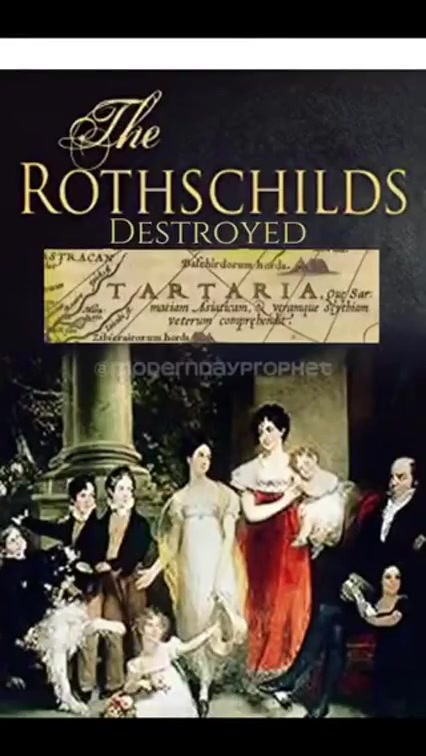
"Tartary" (also "Tartaria," from earlier "Tatary") was the name used in Western European literature from the Middle Ages through the early 20th century to designate the vast regions of Central and Northern Asia inhabited by Turkic and Mongol peoples.
The term appeared on virtually every European map of Asia from the 1200s through the 1800s, encompassing territories that are today:
Parts of Russia (Siberia, Far East)
Mongolia
Parts of China (Xinjiang, Inner Mongolia, Manchuria)
Kazakhstan, Uzbekistan, Turkmenistan
Parts of Afghanistan and Northern India
Maps commonly distinguished between:
Chinese Tartary (regions under Chinese control)
Russian Tartary (regions under Russian control)
Independent Tartary (autonomous regions)
The term was admittedly vague, covering different territories at different times, used more as a collective designation for "lands of the Tartars" than as a precisely defined political entity. But it was standard geographical nomenclature for six centuries.
#tartary #tartaria #encyclopediabritannica #forgottenhistory #historicalgeography #centralasia #1920sstandardization #knowledgeloss #cartographicerasure #19thcenturymaps #geographicalnomenclature #systematicremoval #archivalresearch #oxfordsurvey1957 #HistoricalAmnesia
🌍 THE MUDFLOODED ARCHIVE
Uncovering the suppressed acoustic science of old world civilizations. Subscribe for investigations into the architecture, technology, and knowledge systems they forgot to tell us about.
🔔 New documentary everyday
© The Mudflooded Archive













0 Commenti